
Newcastle – Rubber Meanings: a definition-stretch too far?
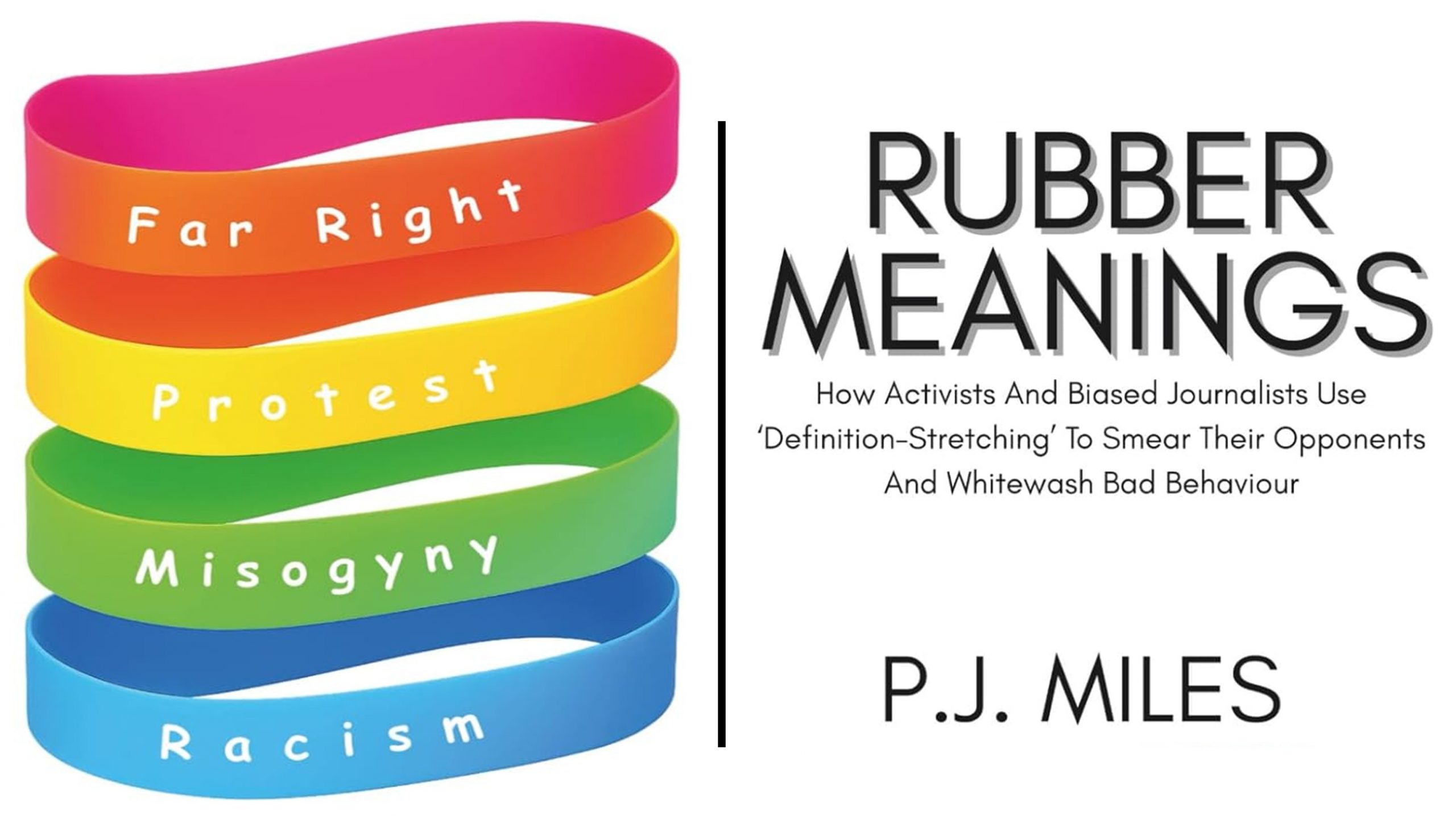
In April, PiPs Newcastle hosted author and PiPs contributor Phil Miles for a discussion on his new book Rubber Meanings: How Activists and Biased Journalists Use ‘Definition-Stretching’ To Smear Their Opponents And Whitewash Bad Behaviour.
Rubber Meanings examines contemporary words of condemnation—”far-right”, “racist”, “misogynist”, “hate”, “phobia”, and others equally familiar—and argues these are often disingenuously broadened in meaning to smear or silence political opponents. It also looks at more positive words and phrases—“refugee”, “protest” and “democracy”—whose meanings have been expanded to provide moral cover for the bad behaviour of political allies.
Whilst a case could be made that both the Right and Left in politics are open to such accusations, a crucial difference is that the Left seem to exaggerate their claims to emphasise their view of the world as they would like it to be, whereas the Right seek to emphasise their view of the world as it actually is.
This has gone beyond a simple political war of words, because so many of our institutions—the media, universities, and legal profession—have become dominated by left-wing views, making open and balanced debate almost impossible. Even relevant dictionary definitions of these words have evolved beyond bland fact to statements of ideological position. Are people arriving on boats from France really refugees—especially given that France is a safe country? Does forced displacement—wrong though it may be—truly amount to genocide?
In the discussion, the issue of consequent harms arose, especially to wider society, not simply to those unjustly smeared. In particular, the recent Southport Inquiry suggested some trying to warn about the danger posed by Axel Rudakubana were silenced by “anti-racist activists”. The counter point was raised that the Southport Inquiry had found poor communication between agencies to be the problem. However, the Inquiry did mention the specific instance of one person being accused of stereotyping Rudakubana as “a black boy with a knife”. Other similar examples were raised, including the Valdo Calocane case, the Manchester Arena bombing and—of course—the grooming gangs, all where fear of being called “racist” may have prevented interventions that would have stopped the crimes. The latter point in the discussion stimulated a reminder that many muslims were law-abiding and kind, and that there was a political agenda at work in the discussion.
However, as one participant remarked, there is a clue in the title (Politics in Pubs). Others chipped in that they too were activists and that PiPs participants don’t agree with each other on politics. Indeed they don’t! Nevertheless, this lively interaction may have inadvertently captured the underlying dynamic of the debate surrounding the use of the term “racism”. Populism—and, by implication, democracy?—too, was challenged on the basis that Hitler was popular.
The words and phrases discussed during the meeting were just a few of the examples of ‘definition stretching’ described in Rubber Meanings. The other terms examined in the book are just as thought-provoking – it is a well-researched and entertaining read which ends on a positive note by suggesting how we can call out this sneaky practice when we hear it. But don’t just take our word for it – you can order your own copy of Rubber Meanings at the link below.
Links:
Rubber Meanings on Amazon:
https://www.amazon.co.uk/Rubber-Meanings-Activists-Journalists-Definition-Stretching/dp/B0GQZL5TXJ/
Hansard: debate on Southport Inquiry


